![[Translate to English:] in2030 group](/fileadmin/LODZ_CYBER_HUB/NEWS_EVENTS/IN2030__22_.JPG)
The University of Lodz was the only Polish institution represented at this year’s Ideas Network 2030 Summer Academy in Oxford, an event co-organised by the Hanns Seidel Foundation and dedicated to the future of Europe and its partnerships on the international stage. Held within the historic walls of Corpus Christi College, the event brought together an international group of experts from the fields of politics, economics and academia, including Damian Green, President of Ideas Network 2030 and former UK government minister; Sir Paul Collier, Professor of Economics and Public Policy at the Blavatnik School of Government, University of Oxford; as well as Klaus Welle, former Secretary-General of the European Parliament and current Chair of the Academic Council of the Martens Centre.
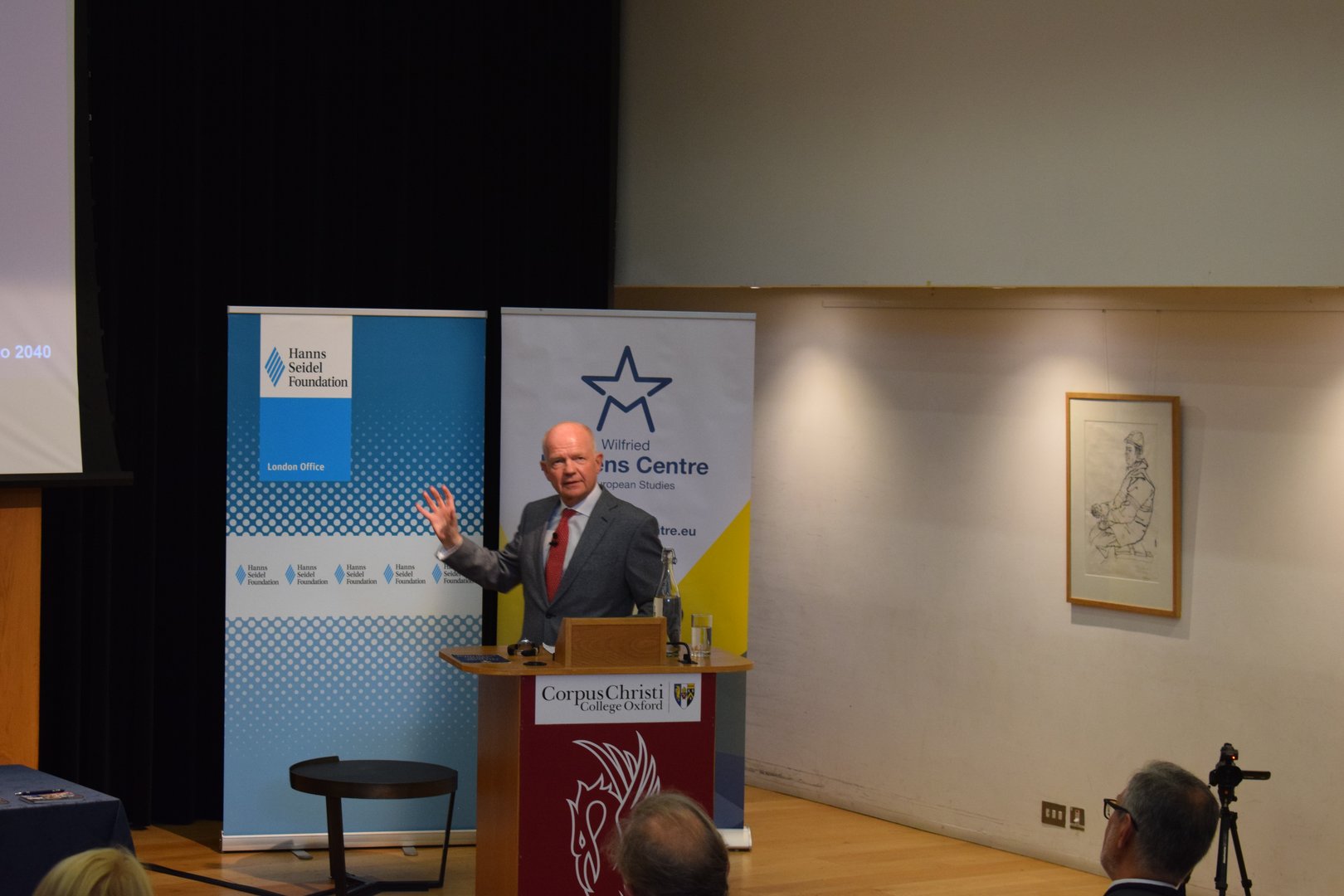
The Academy was opened with an inaugural lecture by Lord William Hague, Chancellor of the University of Oxford, who highlighted, among other issues, the need to ensure that emerging technologies remain consistent with international law.
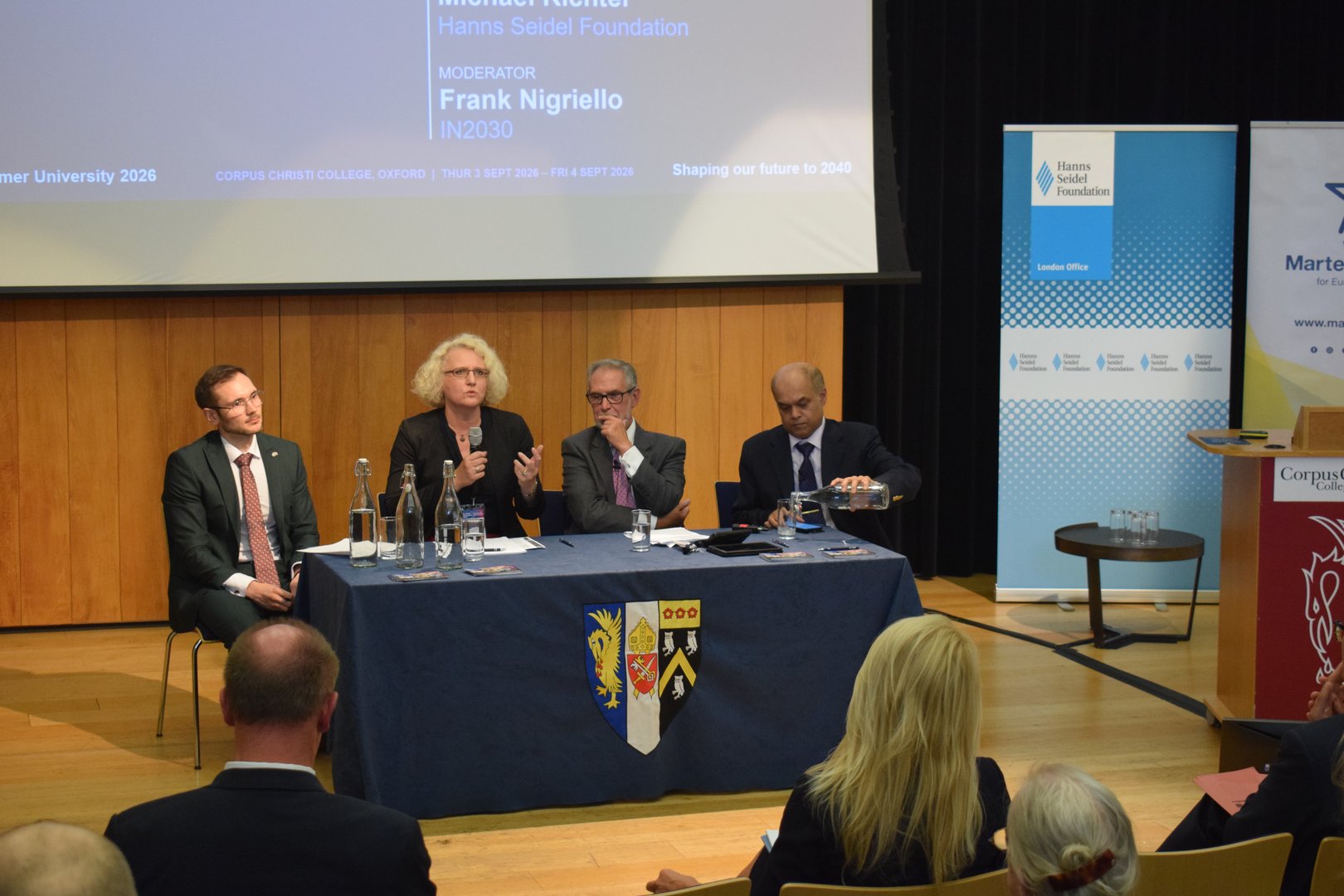
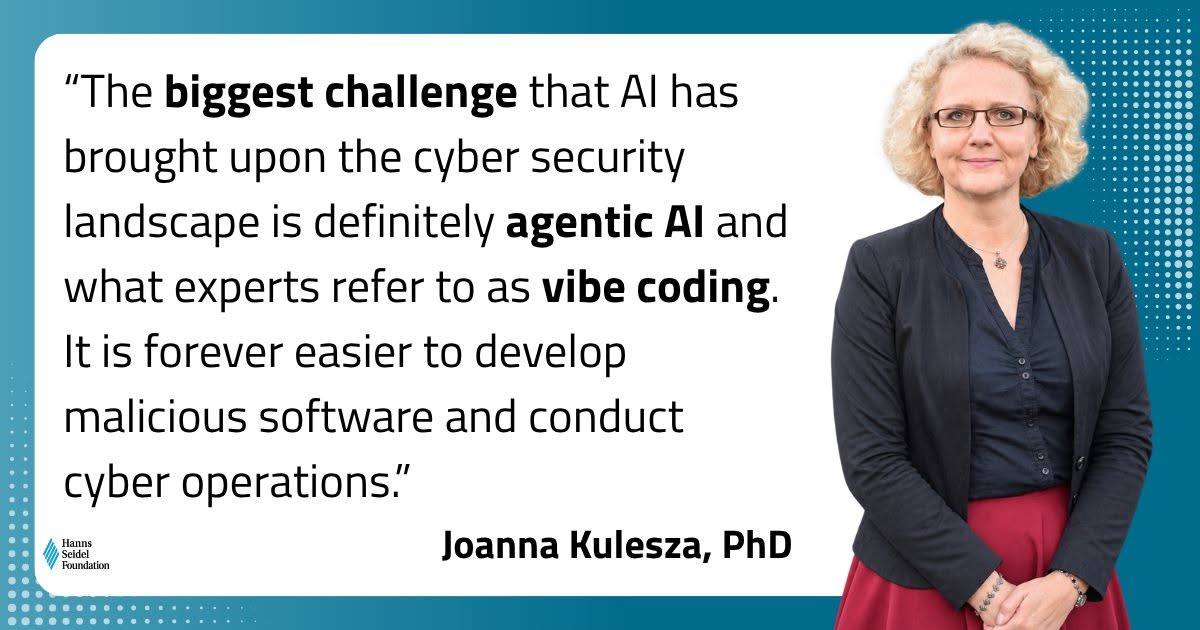
Dr Joanna Kulesza, Assistant Professor at the Faculty of Law and Administration, University of Lodz, and Executive Director of Lodz Cyber Hub, took part in the opening panel, “Digital Transformation: The Power of AI: Challenges to 2040”, where she presented an international law perspective on the challenges that the rapid development of artificial intelligence poses to Europe’s cybersecurity. She noted that while the applicability of international law in cyberspace has been confirmed both by the reports of the UN expert groups and by the Tallinn Manual 2.0, key thresholds, including the point at which a cyber operation constitutes the use of force or justifies a state’s right of self-defence, remain unregulated. She stressed that the response to these challenges should be based on the convergence of existing regulatory frameworks, including the European Union’s AI Act, NATO capabilities, and the norms of responsible state behaviour developed within the framework of the United Nations.
Participation in the event forms part of the objective set by the authorities of the University of Lodz to build long-term relationships with German-speaking institutions. It also reflects the university’s active engagement in shaping European and international policies through the direct involvement of its researchers among decision-makers and experts influencing public debate.
I approach this issue as a researcher in international law specialising in cybersecurity and human rights, as well as from the perspective of Central Europe, a region that has borne the practical burden of hybrid and cyber operations for more than a decade. International law applies in cyberspace. However, key thresholds, including the point at which a cyber operation justifies a state’s right of self-defence, remain within the sovereign discretion of individual states. The challenge of the coming decade is not the absence of law, but rather the lack of institutional implementation of the regulations that we already have
– said Dr Kulesza in Oxford.
We would like to extend our sincere thanks to the Hanns Seidel Foundation for its invitation and hospitality.
Photo: Andrea Polanski (Hanns Seidel Foundation)